DOTHAN, Ala. (WDNews) — As summer temperatures continue to climb across the Wiregrass, safety experts are reminding residents that a parked vehicle can quickly become dangerously hot, creating risks for both people and everyday items left inside.
Researchers say several common items can be damaged or become hazardous when exposed to extreme heat inside a vehicle. Even when outdoor temperatures seem manageable, the interior of a parked car can reach well over 120 degrees in a short amount of time.
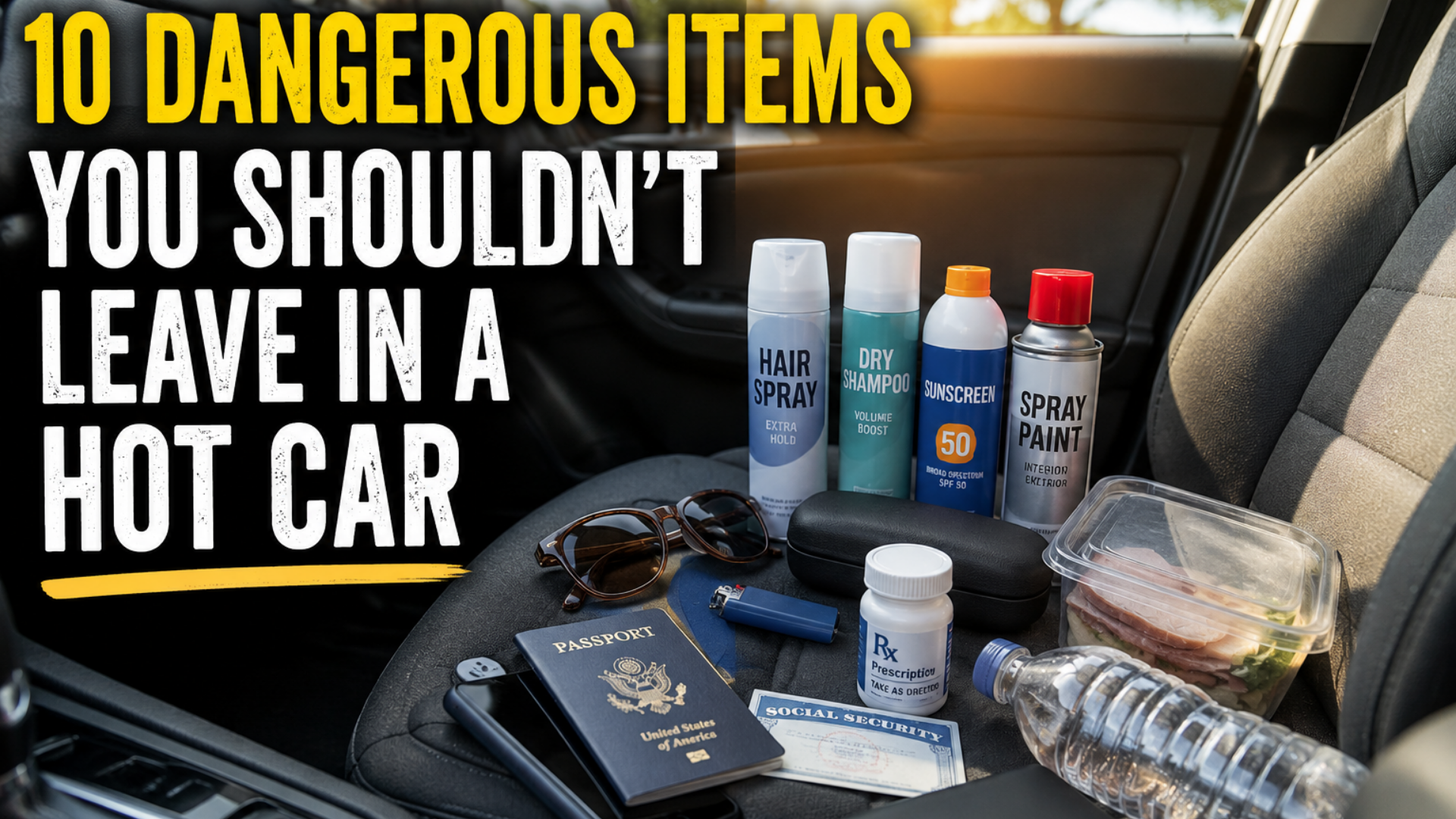
Among the most dangerous items to leave in a hot vehicle are aerosol cans, including hairspray, deodorant, spray sunscreen, dry shampoo and spray paint. These pressurized containers are commonly tested around 120 degrees and can fail when exposed to excessive heat.
Medications are also vulnerable. The U.S. Food and Drug Administration recommends most medicines be stored between 68 and 77 degrees. Excessive heat can reduce the effectiveness of medications, including insulin and epinephrine.
Sunscreen should also be protected from prolonged heat and direct sunlight. Experts warn that high temperatures can break down active ingredients, reducing the product’s effectiveness.
Food and groceries can quickly become unsafe as temperatures rise. The U.S. Department of Agriculture advises that perishable foods should not remain in the 40- to 140-degree “danger zone” for more than two hours, or one hour when outdoor temperatures exceed 90 degrees.
Eyeglasses and sunglasses can also suffer heat damage. Plastic frames may warp, while lens coatings can bubble, crack or peel, especially when left on dashboards.
Lighters and matches pose another concern. Extreme heat can increase pressure inside disposable lighters, raising the risk of fire.
Clear water bottles and glasses cases can create unexpected hazards by focusing sunlight like a magnifying glass. This can produce hot spots capable of scorching vehicle interiors.
Important documents, including passports, Social Security cards, laminated identification cards and thermal paper receipts, can warp, fade or become unreadable after prolonged exposure to heat.
Safety advocates stress that pets and children should never be left inside a parked vehicle. A child’s body temperature rises much faster than an adult’s, and temperatures inside a vehicle can become life-threatening within minutes, even on relatively mild days.
Lithium-ion battery-powered devices, such as cell phones, laptops, power banks, vapes and e-bike batteries, are also at risk. Prolonged exposure to high temperatures can cause batteries to swell, leak or, in rare cases, enter thermal runaway and catch fire.
Officials encourage drivers to double-check their vehicles before leaving and remove heat-sensitive items whenever possible during the summer months.