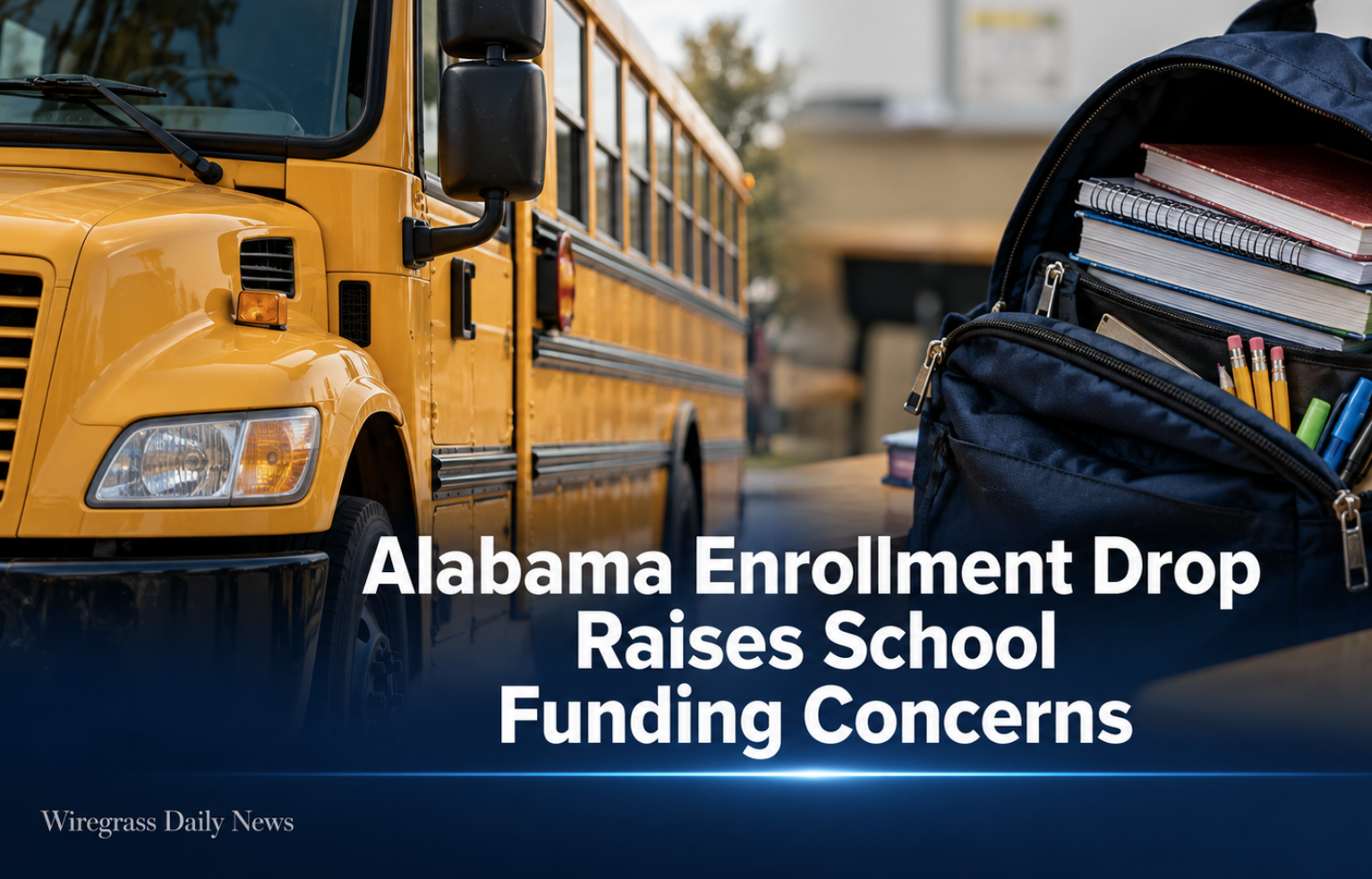
DOTHAN, Ala. (WDNews) — A preliminary drop of nearly 12,000 students in Alabama public schools could mean less state money for education positions, with smaller rural systems facing particular challenges.
According to State Superintendent Eric Mackey, enrollment is about 702,000 students this school year, down from roughly 714,000 last year. Mackey presented the preliminary figures during the Oct. 8 State Board of Education meeting while districts continued checking their records.
“There’s no way that we don’t have a significant loss in students,” Mackey told board members.
According to A+ Education Partnership’s meeting recap, the count includes traditional public schools, public charter schools and public virtual schools. It does not include private school or homeschool enrollment.
Alabama’s Foundation Program bases much of its school staffing funding on enrollment. Mackey estimated the decline could mean the loss of state funding for 750 to 800 positions during the 2027-28 school year.
Those positions include teachers, counselors and assistant principals. A loss of state funding would not automatically mean layoffs, but districts would have to decide whether other money could cover the positions.
For Wiregrass families, the statewide figures do not yet establish how individual local school systems will be affected. No specific local staffing cuts or school closures are confirmed by these preliminary findings.
According to Mackey, some of the deepest enrollment losses appear to be in rural areas. He said continued declines could eventually lead smaller districts to consider combining resources, though he had not heard from school board presidents seeking consolidation, WSFA reported.
State education officials are still examining the reasons behind the decline. Possible factors include fewer children entering kindergarten, families moving and students transferring to private schools or homeschooling.
According to A+ Education Partnership, Mackey said the department needs more information to understand where students have gone. The preliminary findings do not establish how much each factor contributed.
Schools with limited course offerings have an existing resource through Alabama’s ACCESS Virtual Learning program. According to ACCESS, it offers more than 80 middle and high school courses taught by Alabama-certified teachers at no cost to schools or families.
Courses include core subjects, electives, Advanced Placement and world languages. Participating schools must still provide local supervision under the program’s requirements.