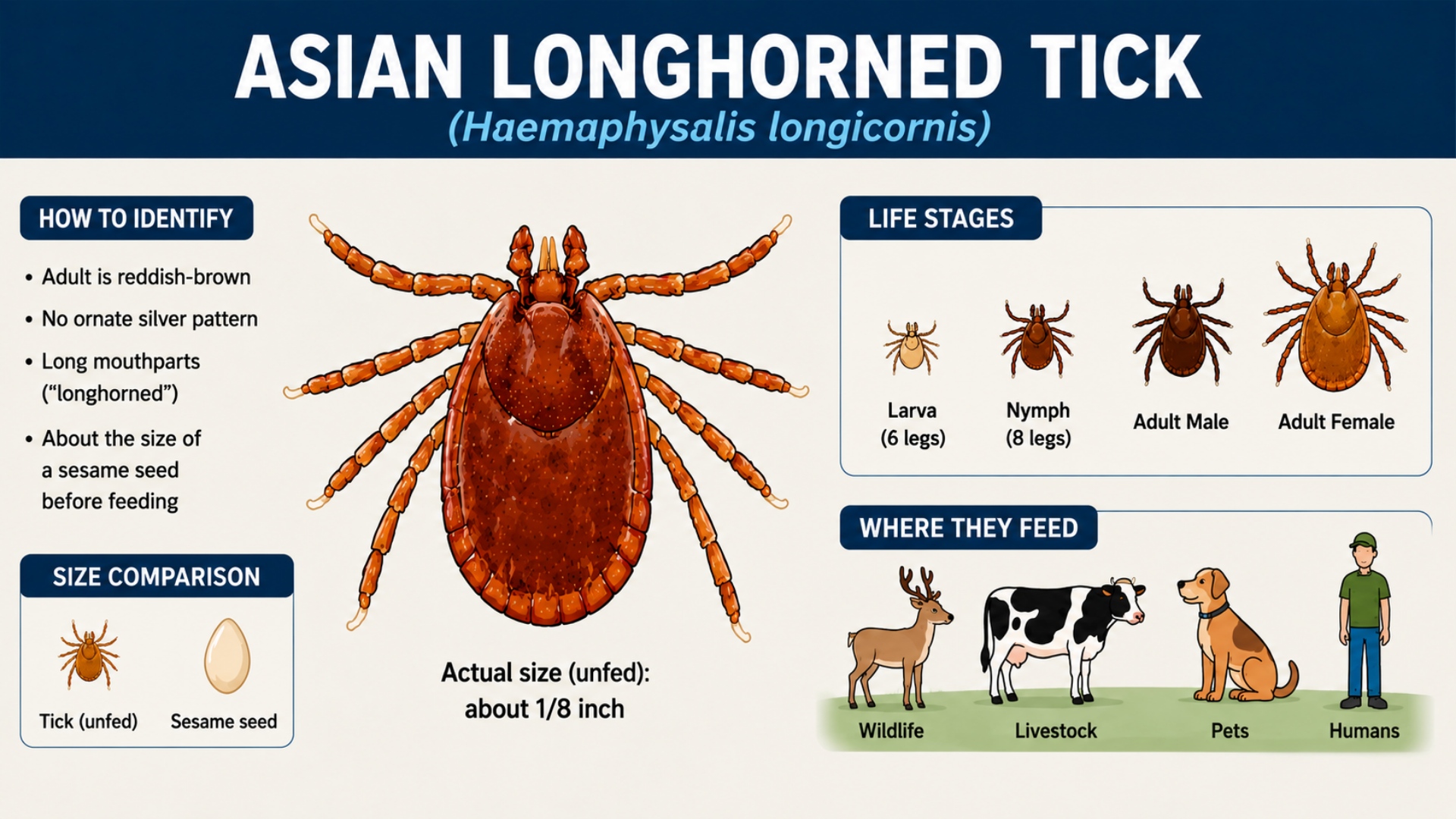
DEKALB COUNTY, Ala. (WDNews) — Alabama agriculture officials are warning livestock producers, pet owners and outdoor enthusiasts after the invasive Asian longhorned tick was confirmed in the state for the first time.
According to the Alabama Department of Agriculture and Industries, the Asian longhorned tick (Haemaphysalis longicornis) was detected on a dog in DeKalb County in April. The species is native to eastern Asia and was first confirmed in the United States in 2017. It has since been reported in multiple states across the eastern United States.
Officials say the tick poses a significant threat because females can reproduce without mating and may lay between 1,000 and 2,000 eggs at a time, allowing populations to grow rapidly.
The tick feeds on humans, pets, livestock and wildlife. According to Alabama agriculture officials, it is a known carrier of Theileria orientalis, a disease that can seriously impact cattle. Officials also say the species has been associated with concerns about the transmission of diseases including Rocky Mountain spotted fever and Heartland virus.
Experts say the ticks are very small, light reddish-brown in color and can be difficult to spot before feeding. Heavy infestations on livestock may lead to anemia, weakness, weight loss, poor condition and, in severe cases, death.
Officials recommend routinely checking pets and livestock for ticks, keeping grass and brush trimmed, using approved tick-control products and reporting unusual tick infestations to a veterinarian or appropriate agricultural authorities.
The Alabama Department of Agriculture and Industries encourages residents to remain vigilant as officials continue monitoring the spread of the invasive species across the state.
While the tick was discovered in northeast Alabama, officials note that increased travel during the summer and fall months could contribute to its spread. Many Wiregrass residents travel throughout Alabama for vacations, camping trips, hunting, hiking, sporting events and outdoor recreation, creating more opportunities for people, pets and equipment to come into contact with ticks in affected areas.