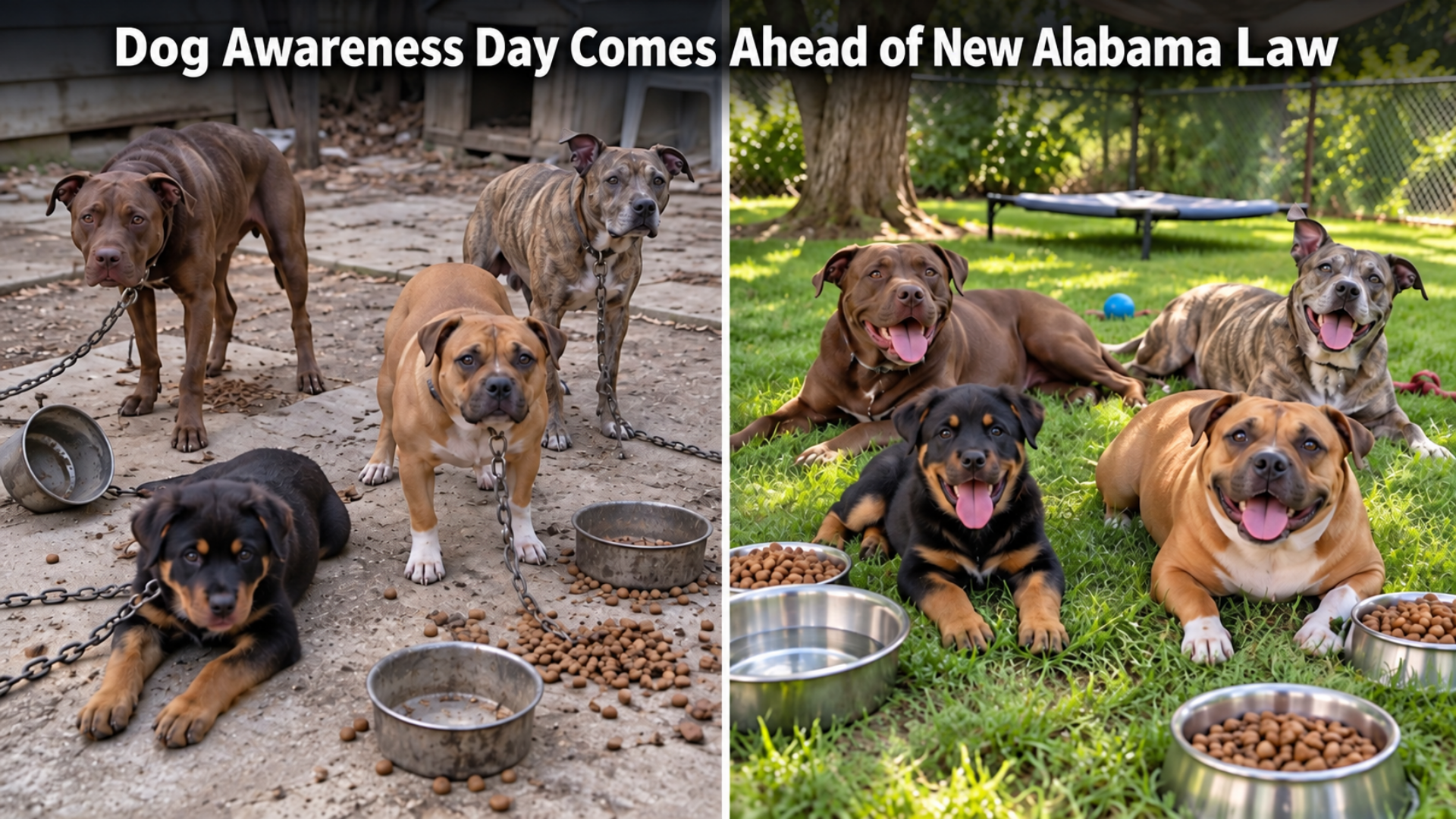
DOTHAN, Ala. (WDNews) — Saturday, Sept. 19, marks Puppy Mill Awareness Day, an observance focused on raising awareness about conditions in large-scale commercial dog breeding operations and encouraging people to carefully research where a dog comes from before bringing one home.
According to National Day Calendar, Puppy Mill Awareness Day is observed on the third Saturday of September. The organization says the day is intended to educate the public about puppy mills and encourage responsible decisions when adopting or purchasing a dog.
The observance also comes during a month when responsible dog ownership is being highlighted nationwide.
According to the American Kennel Club, National Responsible Dog Ownership Day is Sept. 17, with responsible dog ownership events held throughout September. The effort focuses on the long-term commitment of owning a dog, including proper care, training, health and safety.
For Alabama dog owners, that focus comes just days before a new state law governing the care of dogs kept outside takes effect.
Senate Bill 361, commonly referred to as Beau’s Law, was enacted in April and takes effect Oct. 1, 2026. The law establishes requirements for tethering and confining dogs and sets standards for food, water and shelter.
According to the enrolled version of SB361, a person generally cannot tether a dog directly to a stationary object such as a tree, pole, stake or structure unless the dog is tethered using a trolley system that meets the requirements of the law.
The tether cannot be unreasonably heavy compared with the dog’s weight and can be connected to only one dog. It must be attached to a properly fitted collar or harness and have a swivel on both ends to help prevent tangling.
The tether also must keep the dog on the owner’s property and cannot extend over an object or edge that could cause injury or strangulation. It must be positioned to prevent the dog from becoming entangled with other objects or animals.
Logging chains, choke collars and pinch collars cannot be used to tether a dog.
The law also establishes requirements for dogs kept in outdoor enclosures.
According to SB361, an enclosure must be secure, fully fenced and provide enough space for the dog to move freely. The enclosure must keep the dog on the property, and the dog must have continuous access to adequate food, water and shelter.
The law specifically defines what is required for outdoor shelter.
A dog kept tethered or confined outside must have access to shelter that allows the animal to remain dry and protected from the weather. Shade must be provided, along with bedding during cold weather when necessary.
The shelter must be fully enclosed with an adequate opening for the dog to enter and leave and must have a solid floor. It must also provide enough room for the dog to stand, turn around, lie down normally and extend its limbs.
The shelter must be made of durable materials, provide adequate ventilation and remain free of accumulated waste, standing water and debris. The dog must have unlimited access to the shelter.
The law includes several exemptions.
Certain tethering and confinement provisions do not apply to licensed veterinary practices, boarding kennels, public or private animal shelters, licensed grooming facilities, service or assistance dogs and certain dog shows, competitions and lawful hunting or retrieving training.
Commercial dog breeders licensed by the U.S. Department of Agriculture as Class A dealers are also exempt from the tethering and confinement provisions listed in that section of the law.
Other exemptions include dogs used or trained for shepherding or herding livestock, cultivating agricultural products, hunting or retrieving.
Temporary tethering or confinement is also allowed in certain situations, including near a business while the owner is inside or interacting with the business and at a campsite, recreation area or home, as long as the amount of time is reasonable considering the weather.
Counties and municipalities may appoint animal control officers to investigate alleged violations.
If a certified law enforcement officer has probable cause to believe the law has been violated, the officer may remove a dog if the officer believes the animal’s life is in danger. An officer may also order the owner to provide care needed to comply with the law at the owner’s expense.
Violations carry increasing misdemeanor penalties.
A first violation is a Class C misdemeanor. A second violation is a Class B misdemeanor, while a third or subsequent violation is a Class A misdemeanor. A person who violates the law must also pay the full cost of boarding and veterinary care provided to the dog.
SB361 takes effect statewide Oct. 1, 2026.
 Transparency note: Real dogs were used in this photo illustration. No animals were harmed or placed in unsafe conditions to create this image.